
Practical, plain-language guides from GNG Pine Products on coffin and casket prices, types, sizes and planning a funeral in South Africa.
Coffin vs Casket vs Dome: Types, Sizes & How to Choose
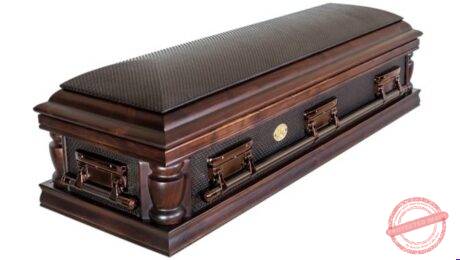
Quick answer:
- A coffin has six sides and tapers from the shoulders to the head and feet.
- A casket is a rectangle with four straight sides, which gives it a more formal look.
- A dome is a casket with a raised, rounded lid: the fullest and most formal shape of the three.
Walk into any funeral home and you’ll hear the words “coffin” and “casket” used as if they mean the same thing. Then someone mentions a dome, a halfview, a 3 tier or a porthole, and suddenly it feels like you need a dictionary just to say goodbye.
You don’t. In this guide, the people who make all three at GNG Pine Products explain every type in plain language, with pictures, a size chart and a simple checklist for choosing. By the end, you’ll know exactly what you’re looking at, and what fits your family, your traditions and your budget.
In this guide
Coffin vs casket vs dome at a glance
| Coffin | Casket | Dome casket | |
|---|---|---|---|
| Shape | Six-sided, tapered | Rectangular, four sides | Rectangular with a raised, rounded lid |
| Lid styles | Flat, 2 tier, 3 tier | Flat, halfview, quarterview, porthole | Domed, textured, hide-pattern, cathedral |
| Viewing | Usually closed | Often has a viewing lid or window | Depends on the model |
| Look | Traditional and simple | Formal | Grand and stately |
| Budget | Usually the most affordable | Mid to premium | Upper to premium |
| Browse | GNG coffins | GNG caskets | GNG dome caskets |
Wondering what each costs? Our casket and coffin price guide for South Africa covers price ranges, hidden funeral costs and how funeral policies work.
Did you know? To the funeral industry, coffins and caskets are two different things. The Australian Museum explains that a casket is a rectangle that is not tapered to the body, while a coffin is.
What is a coffin? Types of coffins
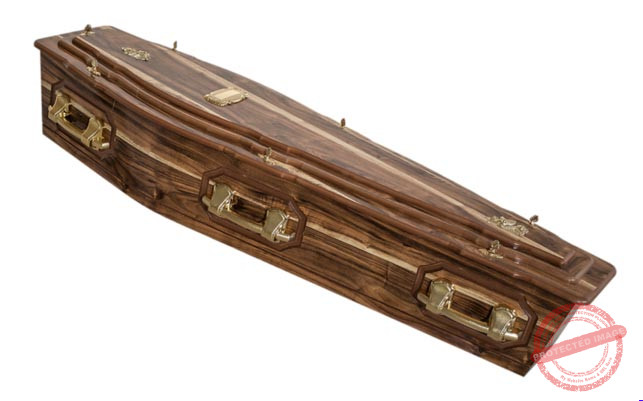
A coffin is the oldest and most recognisable burial box. Its six sides follow the shape of the body: wide at the shoulders and narrower at the head and feet. That shape uses less material than a rectangle, which is one reason coffins are usually the most affordable choice. The history of the coffin goes back thousands of years, and the six-sided design is still the most popular in many countries.
| Coffin type | What it is | Example |
|---|---|---|
| Flat lid coffin | A single flat lid for a simple, understated look | Teak Flat + P |
| 3 tier coffin | The lid rises in three stepped tiers for more depth | Redwood 3 Tier + P |
| 2 tier coffin | A two-step lid; often paired with special details | Pine 2 Tier Wooden Handle |
| Straight edge coffin | Clean, straight-edged profile | Maluti Straight Edge |
| Foil coffin | Wood-grain foil finish in pine, kiaat or redwood tones | Foil coffins |
| Chipboard coffin | Practical coffin made from chipboard | Kiaat Straight Edge |
| Novelty coffin | Distinctive designs, such as a cross on the lid | Kiaat 2T De La Rosa |
What is a casket? Types of caskets

A casket is rectangular, with four straight sides. The straight lines give it a more formal look, and the shape leaves room for viewing lids, decorative bars and padded interiors. Caskets are also where you’ll find the most viewing options.
| Casket type | What it is | See the range |
|---|---|---|
| Halfview casket | The upper half of the lid opens; the lower half stays closed | Standard caskets |
| Quarterview (1/4 view) casket | A smaller section at the head end opens for viewing | 1/4 view caskets |
| Porthole casket | A small viewing window, so the lid stays closed | Porthole caskets |
| Classic textured casket | Alligator, crocodile or ostrich-textured lid | Classic caskets |
| Kingston casket | A solid, traditional casket shape in kiaat, redwood or Maluti | Kingston caskets |
| Premium casket | High-gloss finishes and Windsor-style halfview lids | Premium caskets |
Halfview or quarterview? A halfview shows the upper body, so it suits a traditional open-casket viewing. A quarterview shows only the face and shoulders, a gentler option when the family prefers a more private farewell.
What is a dome casket? Types of domes
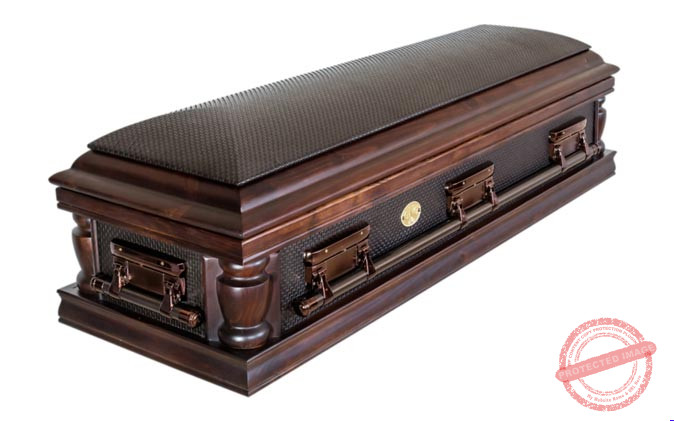
A dome casket is a casket with a raised, rounded lid. That domed top gives it a fuller, more substantial shape, which is why domes are one of the most popular choices at South African funerals. GNG is known in the trade as the Home of the Dome®, and these are the main styles.
| Dome type | What makes it special | Examples |
|---|---|---|
| Standard dome | Classic dome in a light stain, dark stain or polished finish | Light Stain Dome, Dark Stain Dome |
| Nguni dome | Nguni hide-pattern lid and panels, a proudly local design | Nguni Black & White, Nguni Brown & White |
| Presidential dome | Bold textured or patterned lids | Alligator Dome, Woven Dome, Dube Dome |
| Cathedral dome | A tall, sculpted lid with a high-gloss finish | Cathedral Dome Fantasy |
| Mini dome | The dome look in a smaller size | Polished Pine Mini Dome |

The story behind the Nguni dome
Nguni cattle are indigenous to Southern Africa and famous for their many hide colours and patterns. According to the UN Food and Agriculture Organization, the breed is hardy and uniquely adapted to the South African environment. Our Nguni domes celebrate that heritage. And the Dube Dome? Dube is the isiZulu word for zebra, which explains its striking black-and-white lid.
Standard coffin and casket sizes
“Will it fit?” is one of the most common questions families ask. Sizes differ between manufacturers and countries, so treat the figures below as a general guide and always ask your funeral home for the exact dimensions of the model you choose.
| Size | Length | Width | Height |
|---|---|---|---|
| Standard casket (outside) | 84 in (about 213 cm) | 28 in (about 71 cm) | 23 in (about 58 cm) |
| Oversized casket | Similar to standard | Commonly 31 in (about 79 cm) | Varies by model |
Figures from Funeralwise (international industry averages). Centimetres are rounded conversions.
Width matters more than length. If the person who died was broad-shouldered or larger than average, tell the funeral home early so they can order a suitable size. A tapered coffin is narrowest at the feet, so a rectangular casket or dome can be the better fit for a larger build.
Materials and finishes explained
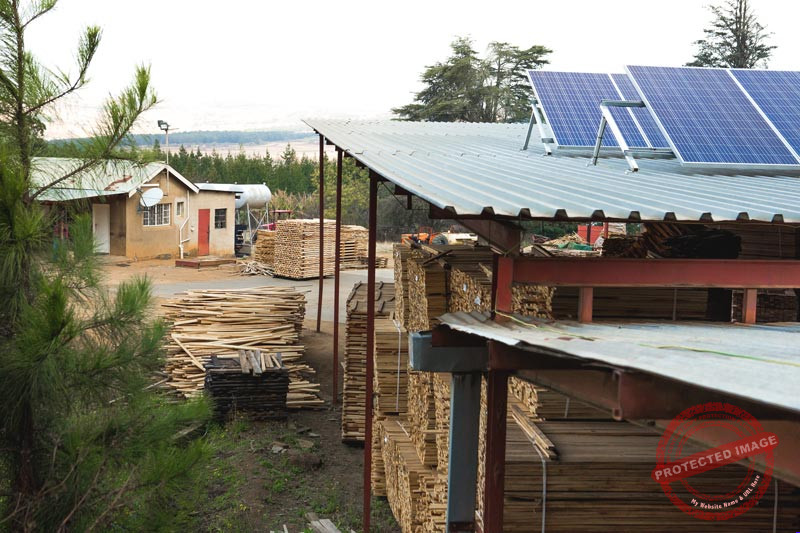
The names in a coffin catalogue (kiaat, redwood, Maluti, imbuia) often describe the colour and finish, not only the timber. Here’s what you’ll see in the GNG range.
| Material or finish | What it looks like | Good to know |
|---|---|---|
| Pine | Warm, golden timber | GNG’s speciality, from our own plantations and sawmill |
| Chipboard | Smooth panels with a coloured finish | A practical, affordable option |
| MDF foil | Wood-grain look in pine, kiaat or redwood tones | Neat and consistent finish at a lower cost |
| Kiaat | Warm, mid-brown tone | A popular, traditional look |
| Redwood | Rich, reddish tone | Adds warmth and depth |
| Teak | Warm teak colour | Classic and understated |
| Maluti | Light, whitewashed grain | A soft, modern look |
| High gloss | Deep, polished shine | Common on premium caskets and domes |
How to choose a coffin, casket or dome in 6 steps
- Start with the budget and the policy. Check how much the funeral policy will pay and what else it must cover. Our price guide lists the typical costs.
- Decide on viewing. Open viewing points to a halfview or quarterview casket; a porthole keeps the lid closed; no viewing makes a coffin a natural choice.
- Respect traditions and faith. Many families choose a dome for its dignity, a Nguni design for its heritage, or a coffin with a cross detail for a Christian service.
- Check the size. Ask for the dimensions, especially the width, for a larger build.
- Pick the finish. Light, warm, rich or high-gloss: choose the colour that feels right for the person.
- Confirm the paperwork and timing. No burial can take place without a burial order from Home Affairs. The Western Cape Government explains the death registration steps; your funeral home usually handles them.
Which one is right for you?
| If you want… | Consider… |
|---|---|
| The most affordable dignified option | A foil coffin or flat lid coffin |
| A coffin with more detail | A 3 tier coffin |
| An open-casket viewing | A halfview casket |
| A private, gentle viewing | A quarterview or porthole casket |
| A grand, formal farewell | A presidential or cathedral dome |
| A proudly South African design | A Nguni dome or the Dube Dome |
| A Christian symbol on the coffin | The Kiaat 2T De La Rosa with its cross detail |
Still not sure which to choose?
Our team can explain every model and tell you what’s in stock at your nearest branch.
Frequently asked questions
What is the difference between a coffin and a casket?
A coffin has six sides and tapers from the shoulders to the head and feet. A casket is rectangular with four straight sides, which gives it a more formal look.
What is the difference between a casket and a dome?
A dome is a type of casket with a raised, rounded lid. A standard casket usually has a flatter or tiered lid.
Which is cheaper, a coffin or a casket?
A coffin is usually the more affordable option, because it uses less material and has simpler lids and fittings. See our casket and coffin price guide for typical ranges.
What is a standard casket size?
Internationally, a standard casket is about 84 inches long, 28 inches wide and 23 inches tall (roughly 213 x 71 x 58 cm). Sizes vary by manufacturer, so ask for the exact dimensions.
What is a 3 tier coffin?
A 3 tier coffin has a lid built up in three stepped tiers. It adds depth and detail to the classic six-sided coffin shape.
What does Nguni mean on a dome casket?
It refers to the Nguni cattle of Southern Africa. GNG’s Nguni domes have a hide-pattern lid and panels inspired by the breed’s distinctive coats.
Keep reading
Read Casket and Coffin Prices in South Africa: The Complete Guide, or explore our dome caskets, caskets and coffins.
Sources: Australian Museum: Burial, coffins and caskets; Wikipedia: Coffin; Funeralwise: Buying a casket; FAO: The Nguni, a case study; Western Cape Government: Registering a death.
- Published in Coffin & Casket Guides
Casket & Coffin Prices in South Africa: The Complete 2026 Guide
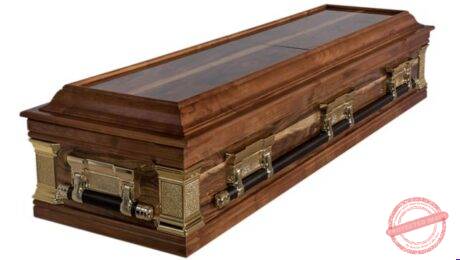
Quick answer: In South Africa a coffin typically costs from about R800 to R50,000+, with an average of around R8,000. Caskets usually sit between R8,000 and R50,000, and lavish caskets and domes can reach R50,000 to R100,000. The final price depends on the shape, material, lid style, finish and where you buy it.
These are published market ranges from South African consumer and news sources (linked below), not GNG’s own price list. Funeral homes can get current GNG prices from their nearest branch or by calling 034 995 1242.
Nobody wants to shop for a coffin. It usually happens in a hurry, in the middle of grief, with family phoning from three provinces and everyone asking the same question: “How much is this going to cost?”
We’ve made coffins, caskets and domes in Paulpietersburg, KwaZulu-Natal, since 1988. In this guide we put everything we know about pricing in one place: real price ranges, what makes one casket cost five times more than another, the hidden costs of a funeral, and practical ways to keep the budget under control without losing dignity.
Key takeaways
- South Africa ranks as the fourth most expensive country in the world for funerals.
- The coffin or casket is usually the single biggest cost of a funeral.
- Shape matters: a six-sided coffin is usually the most affordable, a rectangular casket costs more, and a dome casket sits at the top end.
- Material, lid style, viewing options, handles and finish all move the price.
- Most funeral policies are capped at R100,000 per person, so match your coffin choice to your cover.
In this guide
- Coffin and casket price ranges in South Africa
- Why one casket costs more than another
- Prices by style: which coffin or casket fits your budget?
- The full cost of a funeral (the coffin is only part)
- Will your funeral policy cover it?
- Funeral budget planner
- 9 smart ways to save on a coffin
- For funeral homes: buying direct from the manufacturer
- Frequently asked questions
Coffin and casket price ranges in South Africa
Prices vary widely, but South African consumer and news sources report fairly consistent ranges. The table below brings them together.
| Item | Published price range (ZAR) | Source |
|---|---|---|
| Coffin (all types) | R800 to R50,000+ (average about R8,000) | ClearScore |
| Coffins | R450 to R15,000 | Hippo |
| Caskets | R8,000 to R50,000 | Hippo |
| Lavish caskets and domes | R50,000 to R100,000 | Daily Maverick |
| Basic coffin for cremation | R800 to R5,000 | ClearScore |
Why such a big spread? Because “coffin” covers everything from a simple flat-lid design to a polished, padded presidential dome with a textured lid. The rest of this guide explains where your money goes.

Why one casket costs more than another
Two caskets can look similar in a photo and still be thousands of rand apart. These are the factors that drive the price.
| Price factor | Usually more affordable | Usually more expensive |
|---|---|---|
| Shape | Six-sided, tapered coffin | Rectangular casket or raised-lid dome |
| Material | Chipboard or MDF with a wood-grain foil | Solid pine with a polished, stained finish |
| Lid | Flat lid | Tiered, domed or sculpted (cathedral) lid |
| Viewing | Closed lid | Halfview, quarterview or porthole lid |
| Finish | Plain or foil finish | High-gloss, textured (alligator, crocodile, ostrich) or hide-pattern lid |
| Interior | Simple lining | Padded satin interior and pillow |
| Handles and fittings | Standard handles | Decorative bars, ornate handles and trims |
| Where you buy | Package through a funeral home that buys direct from a manufacturer | Several middlemen between factory and family |
Not sure what a halfview or a 3 tier lid is? Our guide to coffin vs casket vs dome types and sizes explains every style with pictures.
Did you know? A worldwide study reported by Daily Maverick found that a burial or cremation in South Africa costs about 13% of the average annual salary, the fourth highest in the world.
Prices by style: which coffin or casket fits your budget?
Here is how the main styles compare, from the most affordable to the most elaborate. Use it as a general guide: exact prices differ by finish and supplier, so always ask for a quote.
| Style | Budget level | What makes it different | See the range |
|---|---|---|---|
| Flat lid coffin | Entry | Simple six-sided coffin with a single flat lid | Pine Flat + P |
| Chipboard and foil coffins | Entry | Wood-grain foil or chipboard finish in pine, kiaat or redwood tones | Foil coffins |
| 3 tier coffin | Entry to mid | Lid built up in three steps for more depth and detail | Kiaat 3 Tier + P |
| Novelty coffins | Mid | Distinctive details, such as a cross on the lid or wooden handles | Kiaat 2T De La Rosa |
| Quarterview casket | Mid | Rectangular casket with a small viewing section at the head | 1/4 view caskets |
| Standard halfview casket | Mid | Upper half of the lid opens for viewing | Standard caskets |
| Porthole casket | Mid to upper | Viewing window, so the lid can stay closed | Porthole caskets |
| Standard dome | Upper | Raised, rounded lid for a fuller, formal look | Standard domes |
| Classic textured casket | Upper | Alligator, crocodile or ostrich-textured lid | Classic caskets |
| Nguni dome | Upper to premium | Nguni hide-pattern lid and panels | Nguni domes |
| Premium halfview casket | Premium | High-gloss finish and Windsor-style halfview lid | Premium caskets |
| Presidential and cathedral domes | Premium | Bold textured or patterned lids, or a tall sculpted lid | Presidential domes |

What about dome casket prices?
Dome caskets are among the most searched-for funeral products in South Africa, and they sit at the upper end of the market. A standard dome in a light stain, dark stain or polished finish is usually the most affordable dome. Nguni domes, presidential domes and cathedral domes cost more because of their textured, patterned or sculpted lids. A mini dome gives the dome look in a smaller size.
The full cost of a funeral (the coffin is only part)
The coffin is usually the biggest single item, but it is rarely the only one. Here are the other costs families often forget to budget for.
| Funeral cost | Typical range (ZAR) | Source |
|---|---|---|
| Grave site (municipal) | R1,500 to R6,000 | ClearScore |
| Private mortuary storage | R100 to R500 per day | ClearScore |
| Cremation fee | R5,000 to R9,000 | ClearScore |
| Urn | R500 to R3,000 | ClearScore |
| Catering | R1,000 to R20,000 | Hippo |
| Traditional cow and ingredients | R6,000 to R15,000 | Hippo |
| Whole funeral | R3,000 to R40,000 (much more for large or traditional funerals) | ClearScore |
Government mortuaries generally charge no daily fee for the first 30 days, so ask where the body will be kept before choosing a private mortuary. Remember too that no burial may take place without a burial order from the Department of Home Affairs, which your funeral home usually arranges for you.
Will your funeral policy cover it?
Funeral cover is the most common way South African families pay for a funeral. Under the Policyholder Protection Rules, a funeral policy may not pay more than the maximum set by the Prudential Authority, and the regulators have confirmed that this limit is R100,000 per life insured, per policy.
Before you choose a coffin, check three things on the policy:
- The cover amount for the person who died. Cover for children and extended family is often lower than for the main member.
- The waiting period. Most policies don’t pay for a natural death in the first few months. The FAIS Ombud warns that this is a common reason claims are declined.
- Whether the funeral home deals with the claim. Many funeral homes can claim directly from the insurer, so the family doesn’t have to pay upfront.
Tip: Ask the funeral home for a written quote that splits the coffin from the service fees. That way you can see exactly how much of your cover goes to the coffin, and whether a different style would leave more for catering, transport or a tombstone.
Funeral budget planner
Print this table or copy it into your phone. Fill in the quotes you receive so the whole family can see where the money goes.
| Item | Notes | Your quote (R) |
|---|---|---|
| Coffin, casket or dome | Style, finish, viewing lid | |
| Funeral home service fee | Collection, preparation, paperwork | |
| Mortuary | Days x daily rate | |
| Grave or cremation | Municipal or private | |
| Transport | Hearse, family transport, distance | |
| Tent, chairs and catering | Number of guests | |
| Flowers and programmes | ||
| Tombstone (later) | Often paid months after the funeral | |
| Total | Compare with the policy payout |
9 smart ways to save on a coffin (without losing dignity)
- Decide on viewing first. If the family doesn’t need an open lid, a closed coffin or a porthole casket can cost less than a full halfview casket.
- Choose the shape, then the finish. A coffin with a beautiful finish often looks just as dignified as a plain casket, at a lower price.
- Consider a 3 tier coffin. The stepped lid adds detail without the cost of a dome.
- Look at foil and chipboard ranges. Modern wood-grain foil finishes look neat and cost less than solid timber.
- Ask for the casket separately on the quote. It’s easier to compare prices when the coffin isn’t hidden in a package.
- Stay local. Buying through a funeral home near a supplier’s branch cuts transport costs and delays.
- Use the policy wisely. Spend the cover where the family values it most: coffin, catering or tombstone.
- Don’t decide under pressure. A good funeral home will give you time and show you options in different price bands.
- Plan ahead. Writing down preferences now (style, finish, burial or cremation) saves the family hard decisions later.
For funeral homes: buying direct from the manufacturer
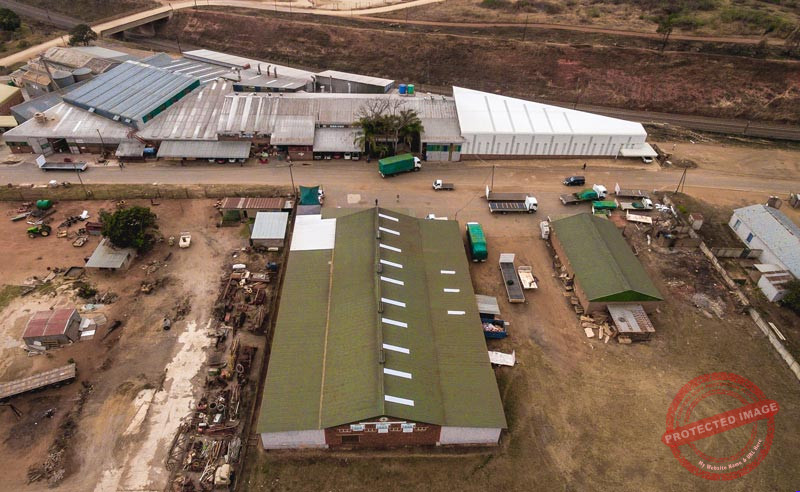
If you run a funeral home or undertaking business, the price you pay for stock decides what you can offer families. GNG Pine Products controls the whole supply chain: we grow our own pine, mill our own timber and manufacture every coffin, casket and dome in Paulpietersburg. That means consistent quality, reliable stock and competitive trade prices.
- The full range under one roof: coffins, caskets and dome caskets, from entry-level to presidential.
- Branches nationwide: head office plus 12 branches in Bloemfontein, Cape Town, East London, Empangeni, Ladysmith, Mthatha, Nelspruit, Polokwane, Roodepoort, Rosslyn, Wadeville and Welkom.
- Made in South Africa since 1988, with a sawmill and factory partly powered by solar energy.
Need current coffin and casket prices?
Call GNG head office or contact the branch nearest to you for prices and stock.
Frequently asked questions
How much is a coffin in South Africa?
Published South African sources put coffin prices between about R800 and R50,000 or more, with an average of around R8,000. Basic coffins sit at the bottom of that range; polished, padded and decorated models sit at the top.
How much is a casket in South Africa?
Caskets typically cost between R8,000 and R50,000, and lavish caskets and domes can reach R50,000 to R100,000. Viewing lids, textured finishes and premium interiors push the price up.
Why is a casket more expensive than a coffin?
A casket is rectangular, so it uses more material and usually comes with more elaborate lids, hardware and interiors than a tapered coffin. See our coffin vs casket vs dome guide for the full comparison.
What is the cheapest coffin option?
A simple flat lid coffin in a foil or chipboard finish is generally the most affordable option. A 3 tier coffin adds detail for a small step up in price.
Will my funeral policy pay for a dome casket?
It depends on the cover amount for the person who died and on the other funeral costs. Most policies are capped at R100,000 per person, so ask the funeral home for a written quote and compare it with the payout.
Where can funeral homes buy GNG coffins and caskets?
From GNG’s head office in Paulpietersburg or any of our 12 branches. Call 034 995 1242 or see all branches on our contact page.
Keep reading
Still deciding between styles? Read Coffin vs Casket vs Dome: Types, Sizes and How to Choose, or browse the full GNG product range.
Sources: ClearScore: How much does a funeral cost?; Hippo: Average funeral costs in South Africa; Daily Maverick: Prices to die for; South African Government: Death certificate; Policyholder Protection Rules, Rule 2A; FAIS Ombud: Funeral policies. Price ranges are published market figures and may change; contact GNG for current trade prices.
- Published in Coffin & Casket Guides